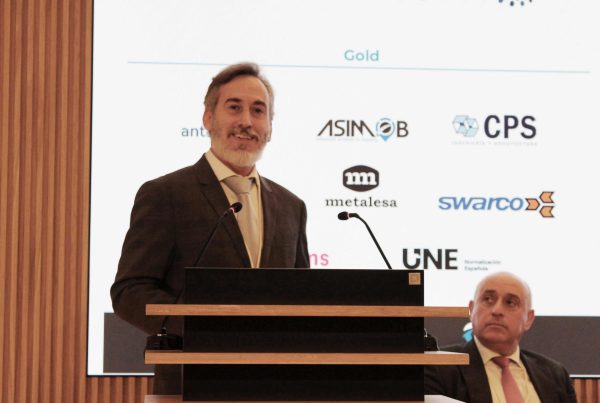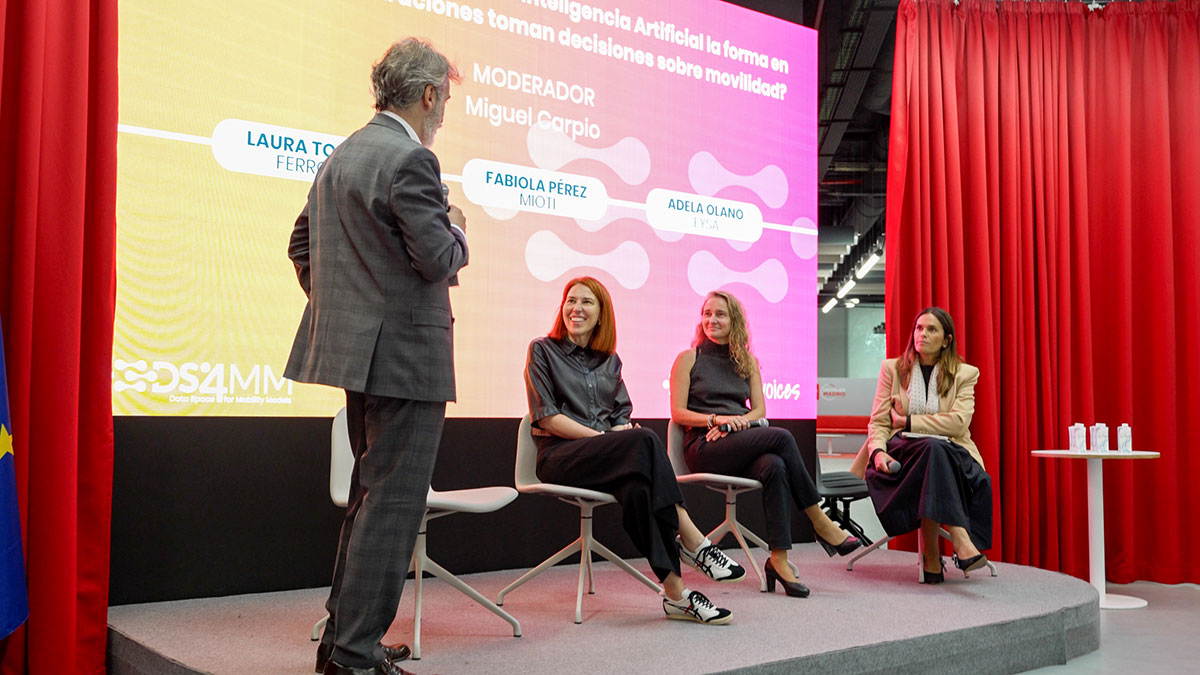
At the Data4voices roundtable, we imagined a day in the life of an engineer managing mobility in a major city with the help of an artificial intelligence assistant.
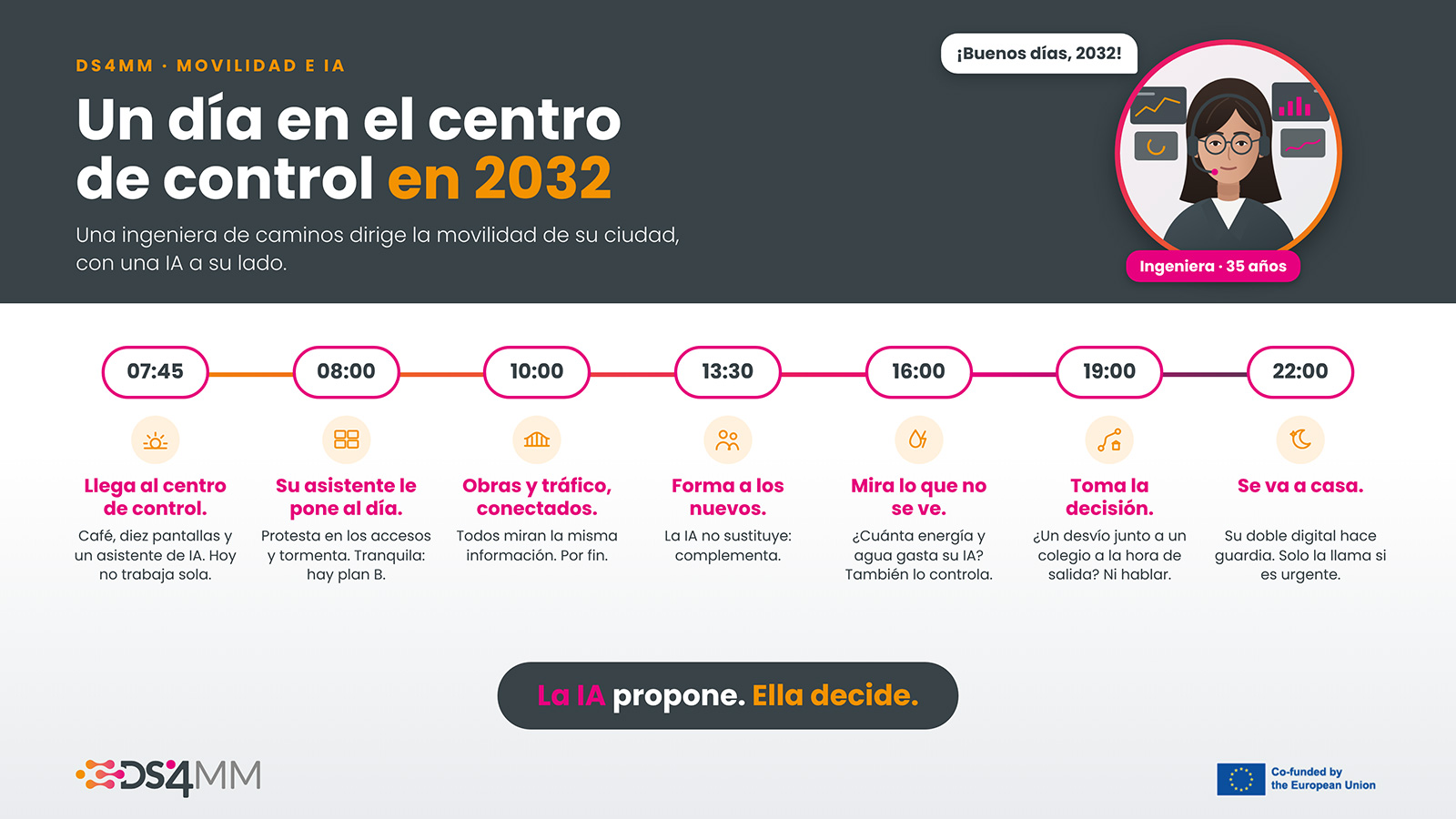
It is 7:45 a.m. on a morning in 2032. A civil engineer arrives at the mobility control centre of a major city. The city is hosting the Olympic Games, and everything needs to run smoothly. She sits down in front of ten screens, but she is not working alone.
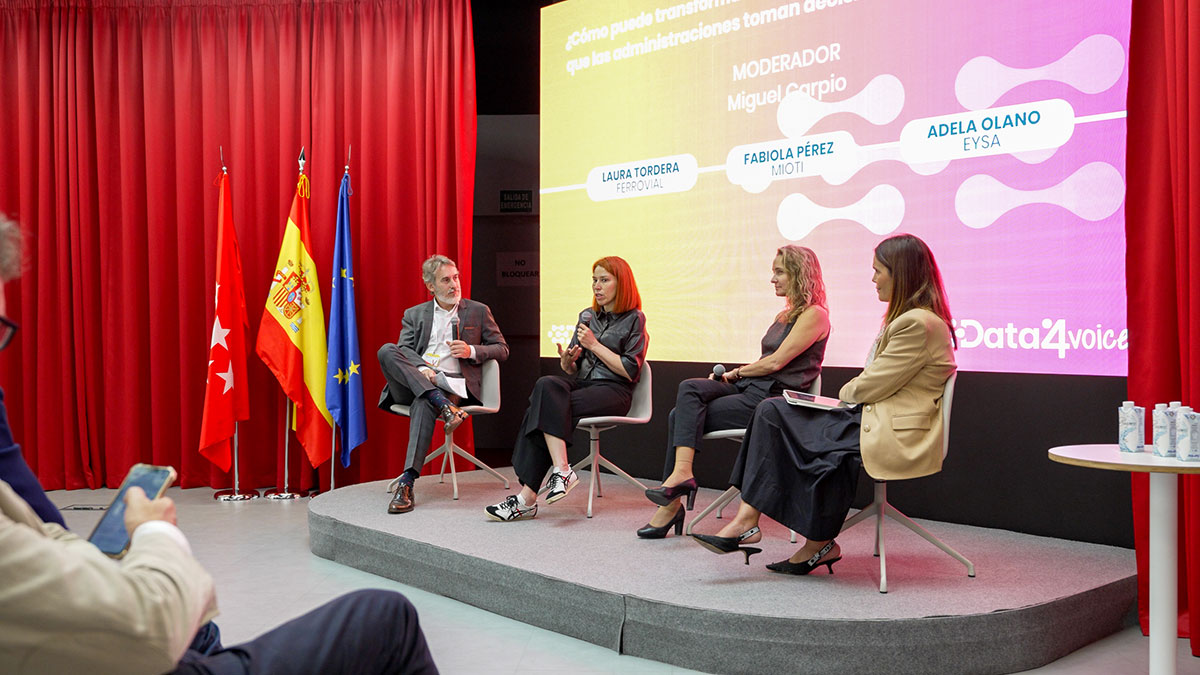
Miguel Carpio, DS4MM coordinator, introduced this character at the roundtable that closed Data4voices on 7 October at Digitaliza Madrid. An imaginary engineer raised a very real question: how will artificial intelligence transform mobility decision-making?
Over the course of the discussion, Fabiola Pérez, CEO of MIOTI; Laura Tordera, Global Head of Innovation & AI at Ferrovial; and Adela Olano, ESG Director at EYSA, built her day hour by hour. Talent, infrastructure and sustainability: three perspectives that yielded the following insights.
07:50What we already delegate
We already leave everyday tasks to AI: outlining a training session, drafting a presentation or filtering email. It is particularly useful for producing an initial draft and even challenging our assumptions. Fabiola Pérez says she uses it “to challenge myself”. But the final version is not delegated: judgement and experience remain ours.
08:00Ten screens and a voice
The assistant has already reviewed all ten screens and gives her a spoken summary: a farmers’ protest is approaching the access roads with tractors, just as the Olympic delegation arrives, and a storm is on its way. Before she has even asked, a contingency plan is ready.
Getting to this point starts with people. First comes training in the responsible use of AI, something already required by European legislation. Then come processes: the first tasks to be automated are repetitive and easy to reverse if something goes wrong. What lies ahead is not replacement, but teams of people and AI agents working together.
10:00Infrastructure designed with data
AI is being introduced into infrastructure in stages. The first is already a reality: design. Construction, materials management and operations follow, covering everything from traffic to noise. But the most noticeable change is in how teams work every day. Previously, each team worked from its own drawings and documents; now the client, contractor and subcontractor can view the same information at the same time.
12:00Who owns the data?
At midday, the assistant combines traffic, public transport, weather and private operator data to manage events across the city. Almost none of these data belong to the control centre itself.
Those with more data and a closer relationship with users have greater capabilities. Until now, the largest aggregators have been technology platforms. We must now also consider new AI players, which collect the context we provide whenever we ask them something. And very few organisations can develop this technology entirely on their own.
That is why data from public authorities and operators need their own rules for trusted sharing, without anyone losing control of what belongs to them. That is exactly what a data space enables.
13:30The newcomer and the veteran
In the control room, a technician with decades of experience works alongside an engineer who has only just joined. The assistant helps both, but in different ways.
For the newcomer, AI shortens the learning curve. For the veteran, it offers an opportunity to rethink the role and ensure that valuable experience, much of which was never documented, stays within the organisation.
What does disappear is repetitive work across all roles. For Fabiola Pérez, this raises the question we should be asking ourselves: “what value do we contribute beyond tasks that are repetitive and can be automated?”
16:00The hidden cost
One screen displays a metric that very few people currently monitor: how much energy and water the system itself consumes.
AI has an environmental footprint, too. Data centres consume large amounts of energy and water and can face public opposition when they are built in water-stressed areas while creating few local jobs. There are possible responses: recovering their waste heat to warm homes, as is already happening in Finland; involving communities from the planning stage; and developing ever-smaller, more efficient models.
Consumption is not the whole story. Just as decarbonisation changed the workplace, AI will transform many jobs. Training and reskilling will be needed to ensure that no one is left behind. We also need new ways to measure outcomes: it is not enough to know what a solution costs. We must ask what it delivers in terms of lower emissions, reduced congestion and a better daily life for people.
19:00The final say
The assistant proposes a diversion for the tractor protest but flags a problem: the route passes a school at dismissal time. She rejects it and looks for an alternative.
That was the roundtable’s central message: AI can anticipate events, prepare the ground and present options, but a person makes the decision, especially when children, local residents or sensitive situations are involved.
This raises another question. If everyone eventually has a digital “second self”, who owns that knowledge: the individual or the company? Some programmers already join new jobs with their own AI agents and are reluctant to hand them over.
The risk is a new divide between those who understand AI and those who do not. Fabiola Pérez offered an optimistic perspective: “we will be forced to become more creative”.
22:00Handing over
Her shift ends. She goes home, leaving her digital double on duty, trained by her over several months. It will only alert her if something genuinely critical happens.
Will 2032 look like this? Miguel Carpio ended the discussion on an optimistic note, asking the speakers a question that is relevant to all of us:
Which profession that exists today will be even more important in 2032?
Key takeaways
AI proposes; people decide.
AI anticipates, prepares scenarios and suggests options. The final decision, particularly when people’s lives are affected, remains human.
People come first.
Adoption begins with training and responsible use, then continues with redesigning processes and roles.
Complement, do not replace.
AI shortens the learning curve for newcomers and helps organisations retain the experience of long-serving staff.
Measure what it costs and what it achieves.
Measure energy and water consumption as well as emissions avoided and congestion reduced.
A just transition.
Reskilling is essential to prevent a divide between those who understand AI and those left behind.
From data to knowledge.
The key question is no longer simply who has the data, but who owns the knowledge generated from them.
Why this matters for DS4MM
Our engineer can only work this way if her assistant has access to reliable data from many sources: traffic, public transport, weather, incidents and events. Today, those data are spread across authorities, operators and businesses. Connecting them under clear rules, without anyone losing control of their own data, is what we are building at DS4MM. Without those data, AI will struggle to be useful in mobility management. With them, the control centre of this story may be closer than we think.
Thank you to Fabiola Pérez, Laura Tordera and Adela Olano for such an open and thought-provoking conversation, and to Miguel Carpio for imagining our engineer and guiding us through her day. And thank you to everyone who joined us at Digitaliza Madrid.
>